No-Vig Odds Calculator: Remove Sportsbook Vig
No-vig odds strip out the sportsbook's margin so you can see the market's fair probability before you compare it to your own number.
Key takeaways
- No-vig probability is the market's implied probability after sportsbook margin has been normalized out.
- Sportsbook hold is the amount above 100% when every outcome's implied probability is added together.
- Fair odds are the odds equivalent of the no-vig probability, not necessarily your own betting edge.
- Expected value still depends on the real price available to you, not just the fair market estimate.
- Line shopping matters because lower-vig markets give your probability estimate less margin to overcome.
What is no-vig probability?
No-vig probability is the implied probability of an outcome after the sportsbook's built-in margin has been removed. Bettors also call it fair probability, devigged probability, or true implied probability.
The important distinction is that listed odds are not pure probability. A sportsbook price includes payout, risk, and margin. Smarkets describes implied probability as odds converted into a percentage that includes bookmaker margin. That is why the first step is translation, and the second step is removing the hold.
No-vig odds formula
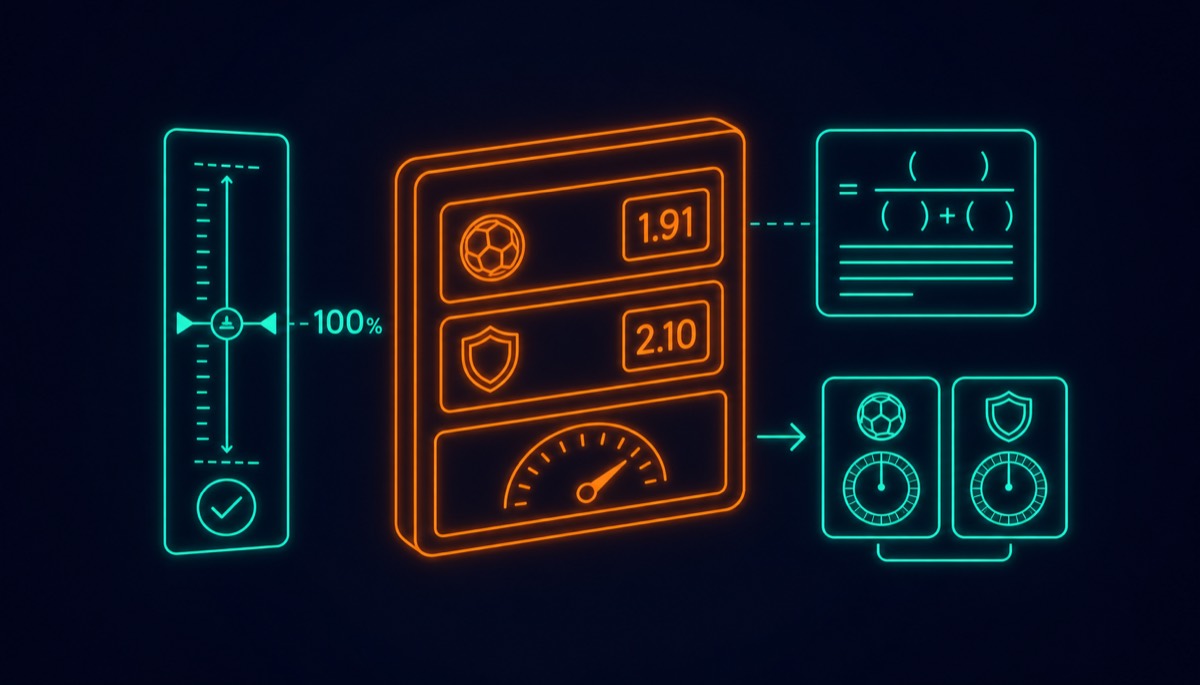
For a two-sided market, use this proportional no-vig formula:
Step 1: Convert each side to implied probability.
Step 2: Market total = Side A implied probability + Side B implied probability.
Step 3: No-vig probability = Outcome implied probability / Market total.
Step 4: Convert the no-vig probability back into fair odds if needed.
This method assumes the margin is distributed proportionally across outcomes. It is the cleanest manual approach for most common moneyline, spread, and total markets. More advanced bettors may use sharper reference books, exchange prices, or weighted devig methods, but the proportional method is the baseline every bettor should know.
Example: remove the vig from -110 / -110
A standard spread or total at -110 on both sides looks close to a 50/50 market, but it is not priced at fair odds.
| Side | Sportsbook odds | Implied probability | No-vig probability | Fair odds |
|---|---|---|---|---|
| Side A | -110 | 52.38% | 50.00% | +100 |
| Side B | -110 | 52.38% | 50.00% | +100 |
The raw implied probabilities add to 104.76%. The extra 4.76 percentage points are the overround, often called vig, juice, hold, or bookmaker margin. After removing that margin, both sides normalize to 50%.
Example: remove the vig from -135 / +115
Most markets are not symmetrical. Suppose a team is -135 and the opponent is +115.
| Side | Sportsbook odds | Implied probability | No-vig probability | Fair odds |
|---|---|---|---|---|
| Favorite | -135 | 57.45% | 55.31% | -124 |
| Underdog | +115 | 46.51% | 44.73% | +124 |
The market total is 103.96%. The favorite's no-vig probability is 57.45 / 103.96 = 55.31%. The underdog's no-vig probability is 46.51 / 103.96 = 44.73%. Those are the fair market probabilities before you apply your own research.
No-vig probability is not the same as edge
No-vig probability helps you read the market. It does not automatically tell you what to bet. A bettor still needs an independent probability estimate from matchup research, injury context, model output, price history, or a trusted market reference.
Use no-vig odds as a benchmark. If the market says a team is 55.3% fair, and your researched number is 58%, you may have a reason to keep working. If you want to measure the sportsbook's hold before removing it, run the price through the sports betting vig calculator guide. Then compare your probability against the actual sportsbook price with the EV calculator. If the edge is real, size the bet with the Kelly Criterion calculator or a more conservative bankroll rule.
When no-vig math is most useful
Comparing sportsbooks
Two books can offer similar-looking lines with different hold. Lower hold means less margin to overcome.
Building fair prices
No-vig probability gives you a clean market baseline before you convert back to fair American odds.
Auditing EV claims
If a tool claims a bet is +EV, compare the tool's probability against both the listed price and the fair market price.
Tracking CLV
When reviewing closing line value, devigged closing prices can make market movement easier to compare.
Common mistakes
- Calling implied probability true probability. Listed odds include margin. They are not a clean estimate until you remove the vig.
- Using no-vig odds as your model. Fair market probability is a benchmark, not your own edge.
- Ignoring multi-outcome markets. Three-way soccer markets, futures, and props with alternate outcomes require every outcome in the market, not just two sides.
- Devigging stale prices. A no-vig calculation on old odds can be worse than a simple check of the current market.
- Forgetting the bettable price. EV is calculated against the odds you can actually place, not the no-vig fair odds.
How this fits into a betting workflow
- Convert the sportsbook odds with the odds converter.
- Remove the vig to understand the fair market baseline.
- Compare that baseline to your own probability estimate.
- Run the bet through the expected value calculator.
- Check whether the price is still available across books using an odds scanner or bet slip scanner app; if opposite sides add up below 100%, check the split with the sports betting arbitrage calculator workflow.
- If the bet survives, size it with bankroll discipline instead of confidence.
FAQ
What does no-vig mean in betting?
No-vig means the sportsbook margin has been removed from the listed odds. The result is a fair-market probability estimate that sums to 100% across all outcomes.
How do you remove vig from betting odds?
Convert each outcome to implied probability, add those probabilities together, then divide each outcome's implied probability by the total market probability.
What is the no-vig probability for -110 and -110?
A -110/-110 market implies 52.38% on each side, or 104.76% total. After removing the vig proportionally, each side has a no-vig probability of 50%.
Should I use no-vig probability for expected value?
Use no-vig probability to understand the market's fair estimate, then compare your own researched probability to the actual sportsbook price you can bet.
Sources and references
- Smarkets: How to calculate implied probability in betting
- Unabated: No-Vig Fair Odds Calculator
- OddsJam: No-Vig Fair Odds Calculator
- Betstamp: Understanding implied probability and edge
Next steps
Start with the break-even odds guide if you want the beginner version of the probability math. Then use the expected value guide, closing line value guide, and bankroll management guide to turn fair odds into a full betting process.