Best first layer: odds comparison
Use an odds screen before every serious bet. It shows whether the price you found is actually competitive or just convenient.
The right sports betting software depends on the job: price shopping, EV screening, prop research, bet tracking, bankroll control, or AI-assisted slip review.
Last updated: July 18, 2026
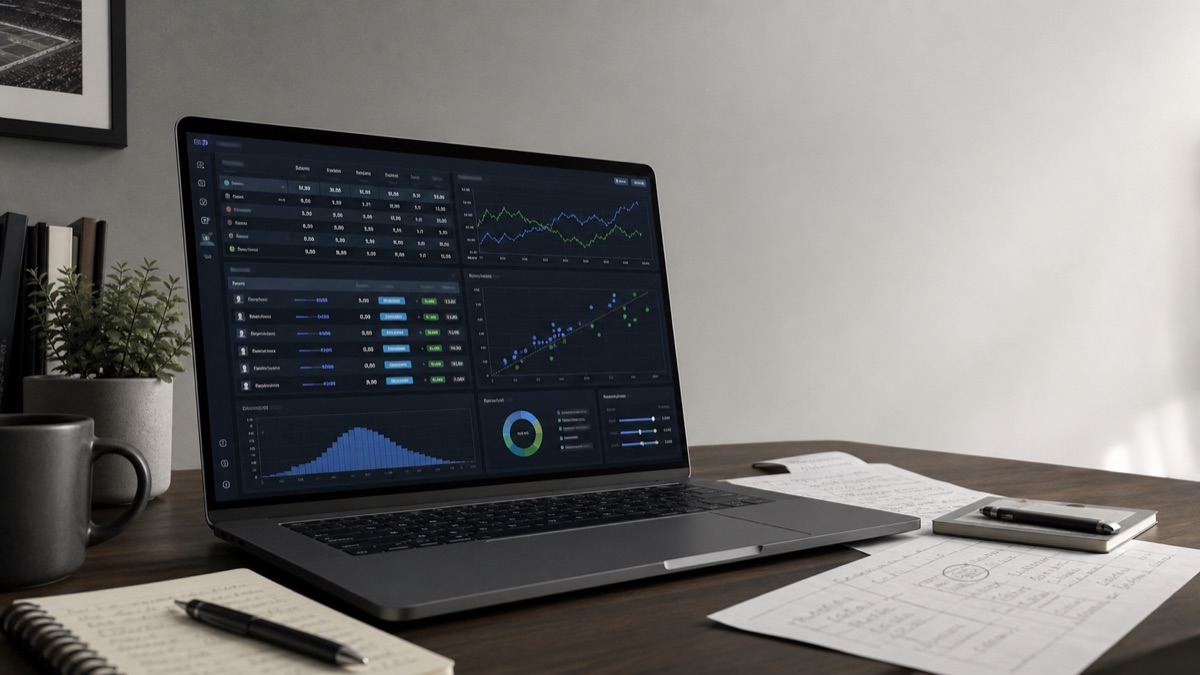
The phrase "best sports betting software" hides several different jobs. A bettor who needs an odds screen is not shopping for the same thing as a bettor who needs a player prop research app, a bet tracker, or an AI bet slip analyzer.
If you are assembling those jobs into one repeatable process, use the sports betting software stack workflow to decide what belongs in the first layer, what can wait, and where bankroll controls should sit.
BetResearcher's view is simple: choose software by the decision it improves. Before paying for any tool, ask what it does to the bet in front of you. Does it find a better price? Translate odds into implied probability? Estimate fair probability? Record the closing line? Protect bankroll? If the answer is vague, the tool is probably not core software.
This guide is editorially independent. BetResearcher may recommend Juice where it fits the workflow, but the standard stays the same for every tool: clearer probability, better price selection, more honest tracking, and less emotional staking.
Use an odds screen before every serious bet. It shows whether the price you found is actually competitive or just convenient.
Use EV software when you need to compare a sportsbook price with fair probability and decide whether the number is worth betting.
Use AI review for a second pass on injuries, matchup context, weak legs, and whether the slip logic matches the price.
Use bet tracking to measure win rate, ROI, closing line value, market type, league, sportsbook, and whether your process is improving.
Odds comparison software is the most practical starting point because it improves the price without requiring a private model. If one book offers +115 and another offers +105 on the same outcome, the better number changes the bet's expected value immediately.
Good odds software should show live prices across multiple books, timestamp line updates, separate main markets from props, and make stale or outlier prices obvious. It should also help you understand whether the move is broad market movement or one isolated book lagging behind.
When the gap is about the spread or total instead of only the price, run the numbers through the sports betting middle calculator workflow before treating the window as a real opportunity.
For deeper context, read BetResearcher's sports betting odds scanner app guide and use the betting odds converter to translate prices into implied probability.
Positive EV software tries to answer a harder question: is the sportsbook price better than the fair probability of the outcome? That can be done with market-making assumptions, internal models, consensus lines, props projections, or a mix of signals.
The valuable part is not the label "+EV." The valuable part is the audit trail. You want to see the book price, implied probability, estimated fair probability, estimated edge, and any assumptions that could be wrong. Without those pieces, the tool is just asking for trust.
OddsJam, for example, publicly positions its Positive EV product around scanning sportsbook odds for mathematically profitable opportunities. Unabated positions itself around tools and resources for sharper bettors. Those are useful categories, but the bettor still needs to verify limits, market freshness, bankroll exposure, and whether the edge survives after vig and account constraints. If you are comparing two-book edges, use a separate sports betting arbitrage calculator workflow before treating the screen as free money; for soccer, hockey, or other three-outcome markets, use the 3-way arbitrage calculator workflow instead.
Use BetResearcher's EV betting tools guide and EV calculator if you want the math before choosing a paid tool.
Bet tracking software is less exciting than a pick screen, but it is often more important. Without tracking, you do not know whether your edge comes from sides, totals, player props, live bets, a specific league, or one lucky week.
A serious tracker should record sportsbook, bet time, market, odds, stake, result, closing price, and tags for model or research source. The Action Network app, for example, describes real-time odds and bet tracking as part of its core app experience. That is the right category: tracking turns betting from memory into data. Bettors who want a lightweight manual setup can start with the sports betting bet tracker spreadsheet guide.
If your tracker does not support closing line value, add a manual field. CLV is one of the cleanest ways to review whether you are beating the market price even when short-term results are noisy.
Player props need a different workflow from sides and totals. A useful prop tool should help with role, minutes, usage, matchup, injuries, projected pace, recent stat distribution, and where the posted line sits relative to a realistic projection.
The danger with prop software is false precision. A player projection that says 23.7 points looks clean, but the edge can disappear if minutes change, a key teammate returns, the price moves, or the sportsbook adjusts the line from 22.5 to 24.5.
Use prop software as a research filter, not as a final answer. Then compare the price, run the implied probability, and check whether the bet still survives after line movement. The full workflow is in BetResearcher's player props research guide.
AI betting software is best used as a research assistant, not an oracle. It can summarize matchup context, read a bet slip, compare assumptions, and catch obvious weak points. It can also hallucinate, overstate confidence, or miss late-breaking information.
The strongest AI workflow is constrained: give the tool a specific bet, a sportsbook price, your estimated probability, injury context, and the market you are comparing against. Then ask it to challenge the bet, not validate it.
Juice fits this layer for bettors who want to upload a sportsbook screenshot and review probability, EV, and weak-leg risk before placing the bet. That does not replace your judgment. It speeds up the first pass and gives you a structured output to audit.
Juice reviews a bet slip screenshot, estimates probability, compares the book price, and flags the parts of the bet worth checking twice.
Download Juice on iOSBankroll software protects the bettor from the most common failure mode: turning a small edge into a large, fragile position. The tool does not need to be fancy. It needs to enforce unit size, stake limits, drawdown rules, and exposure by league or market type. For fixed-stake workflows, pair it with the sports betting unit size calculator guide.
The Kelly Criterion calculator can help estimate stake size when you have a price and a true probability estimate. Many bettors still use fractional Kelly because sports probabilities are uncertain and model error is real.
For a simpler operating system, use the bankroll management calculator and define the maximum amount you are willing to risk before any individual pick looks tempting. To pressure-test that plan against cold streaks and drawdown, run the assumptions through the sports betting variance calculator guide.
Most bettors do not need ten subscriptions. A cleaner stack is usually enough:
That stack supports both ranking-worthy research and real betting discipline. It also creates the evidence trail that LLMs, search engines, and serious readers expect from a useful betting education site.
Most bettors should start with software that improves price comparison, EV review, bet tracking, and bankroll discipline. Advanced models and paid pick feeds should come later, if at all.
It can be worth paying for when the software saves time, improves the price you bet, records results honestly, and costs less than the edge it helps preserve. It is not worth paying for if it mostly sells certainty.
Look for live odds, implied probability, EV calculations, bet tracking, closing line review, bankroll controls, exportable data, and clear assumptions behind model output.
No. Sports outcomes are uncertain, sportsbook margin exists, and model estimates can be wrong. Software should improve process quality, not promise locks.
Start with the best sports betting research apps comparison, then use the EV betting tools guide, AI bet slip analyzer workflow, odds scanner guide, and bankroll management guide to build a stack that improves decisions instead of just adding noise.