Sports Betting Analysis App Workflow Guide
A sports betting analysis app should help you test a bet, not just decorate a pick. Use this workflow to compare apps by odds quality, EV checks, slip review, player-prop context, tracking, privacy, and bankroll control.
Last updated: October 10, 2026
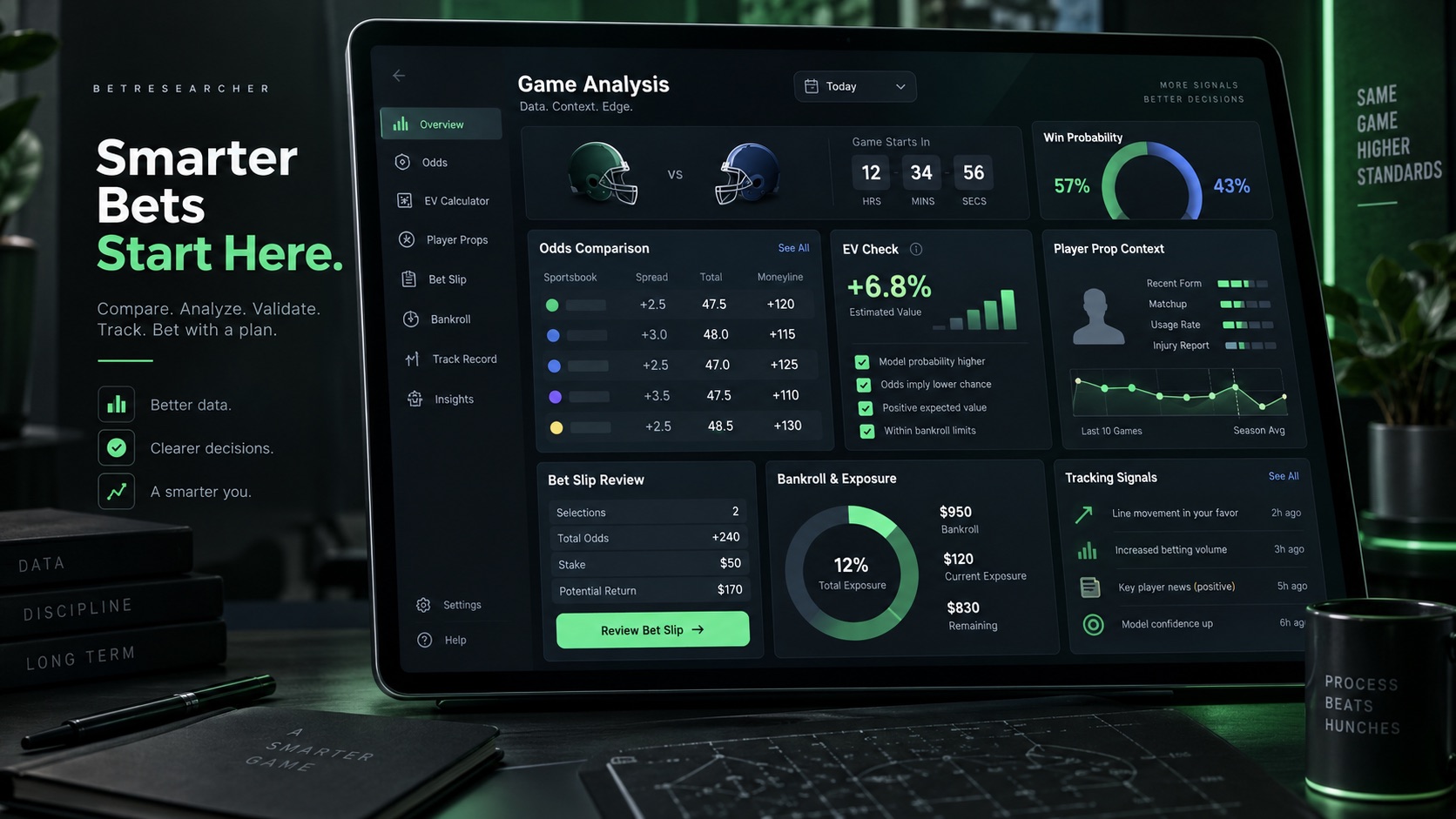
The best sports betting analysis app is not the app with the loudest pick card. It is the app that turns a possible bet into an audit trail: what price you found, what probability you believe, why that probability might be wrong, how much bankroll is exposed, and what you will review after the market closes.
That matters because app categories blur together. A picks app, an odds screen, a player prop database, a bet tracker, and an AI slip reviewer may all call themselves betting analysis software. The workflow below separates useful analysis from confidence theater.
What a real analysis app should cover
It should compare available odds, show implied probability, and make line shopping visible before the bet is placed.
It should explain the fair-probability estimate, whether it comes from a model, market average, manual input, or AI-assisted review.
It should connect the pre-bet decision to tracking, CLV, bankroll exposure, exports, and post-bet review.
Match the app type to the job
Most bettors do not need every feature on day one. They need the right layer for the decision in front of them. Start with the job you repeat most often, then add software only where it removes friction or improves decision quality.
| App layer | Best for | Watch for | Useful BetResearcher path |
|---|---|---|---|
| Odds comparison | Finding the best available price before a bet | Stale lines, missing books, bonus-price confusion | Odds scanner workflow |
| EV screen | Comparing sportsbook price to fair probability | Black-box probabilities, overbetting tiny edges | EV betting tools |
| Bet slip review | Auditing a whole ticket before submission | Weak legs, correlation, parlay math, stake creep | Bet slip scanner apps |
| Player prop research | Checking role, usage, matchup, and market context | Old sample windows, injury-news lag, prop-line drift | Player prop research |
| Tracking and CLV | Reviewing whether the process is improving | Manual-entry gaps, no exports, result-only grading | Bet tracking workflow |
Use the app before you trust the app
Start with the sport, market, book, odds, stake idea, and time. Analysis without the actual price is just a hunch with a dashboard.
Convert the price to implied probability with the odds converter, then remove margin when comparing two-sided markets.
Use your model, market average, prop context, injury notes, or AI review. The app should show what changed the number.
Compare fair probability with the bettable price in the EV calculator. Pass on bets where the edge vanishes after realistic error.
For parlays and multi-leg tickets, check correlation, duplicated exposure, limits, and whether one weak leg controls the whole payout.
Connect the edge estimate to unit size, bankroll caps, and model confidence. A good number can still be a bad bet if the stake is reckless.
Log the bet, closing line, result, and review notes. Closing line value is not perfect, but it is cleaner feedback than one-game results.
How to compare sports betting analysis apps
Use this scoring model before paying for software. The goal is not to crown a universal winner; it is to find the app that improves your actual betting process.
Books, states, sports, props, live markets, refresh speed, and whether the app clearly marks unavailable prices.
Model inputs, market-derived assumptions, AI explanations, confidence intervals, and whether users can override a number.
Expected value, no-vig probability, break-even thresholds, hold checks, and clear pass/fail logic.
Screenshot parsing, parlay-leg review, same-game correlation notes, bet-type support, and weak-leg detection.
CLV, units, ROI, market type, book, closing price, tags, notes, exports, and weekly review views.
Data export, sportsbook-connection requirements, permissions, subscription terms, and whether the app explains data use clearly.
Signals an app is selling certainty instead of analysis
- No price context: A pick appears without the sportsbook price, implied probability, or break-even rate.
- No timestamp: The app does not show when the line, prop, injury note, or model signal was last refreshed.
- No method: The app gives a confidence score but hides the probability source, sample window, or market comparison.
- No bankroll guardrails: The app encourages bet volume without unit-size, exposure, or responsible-play controls.
- No export path: You cannot take your bet history, notes, or CLV data with you if the app stops fitting your process.
A practical analysis stack for most bettors
If you are starting from scratch, do not buy the most expensive screen first. Build a compact stack: one odds comparison path, one probability or EV workflow, one slip-review process, one prop-research source if you bet props, and one tracker.
A free-first version can work: use the free sports betting research apps workflow, combine it with the app comparison checklist, and upgrade only when a paid app saves time or improves price quality enough to justify the subscription.
BetResearcher opinion
The strongest analysis app is usually not the one with the most predictions. It is the one that makes you slower at the right moments: before accepting a bad price, before turning one prop lean into a five-leg parlay, and before raising stake size because the interface feels confident.
Two checks before connecting accounts
Sports betting analysis apps may ask for sportsbook screenshots, bet history, email imports, location context, or account connections. Review permissions, exports, and privacy language before connecting sensitive accounts. Apple and Google both publish app-store privacy guidance that helps users inspect what data an app says it collects or shares.
Also separate analysis from encouragement. Responsible-gaming guidance from the American Gaming Association emphasizes informed play, responsible marketing, and avoiding messages that imply guaranteed outcomes. The National Problem Gambling Helpline is available as a support path for people who need help. For bettors, the practical version is simple: an app should help you set limits, understand odds, and pass on weak bets.
Sports betting analysis app questions
What is the best sports betting analysis app?
The best app depends on your workflow. If you need price quality, prioritize odds coverage. If you bet props, prioritize player context and line movement. If you struggle with review, prioritize tracking, CLV, and exports. Start with the best sports betting research apps comparison, then filter by the job you repeat most.
Should beginners use AI betting analysis apps?
AI can be useful for summarizing context and reviewing a slip, but beginners should keep the math visible. Any AI output should be checked against odds, implied probability, EV, stake size, and source quality before becoming a bet.
Are free analysis apps enough?
Free apps are enough for a basic workflow if they cover odds comparison, EV checks, bet tracking, and disciplined review. Paid software becomes more useful when it saves repeated manual work or gives faster, cleaner price coverage in the markets you actually bet.
What feature matters most?
Price quality. A bettor can have a good model and still make a bad decision at a bad number. Odds comparison and break-even probability are the first checks before deeper analysis.